
Deadbolt installation in Dallas, anchored into the stud, not just the trim.
A new deadbolt on a door that has none, an upgrade from a weak one, or a deadbolt that works with the key you already carry.
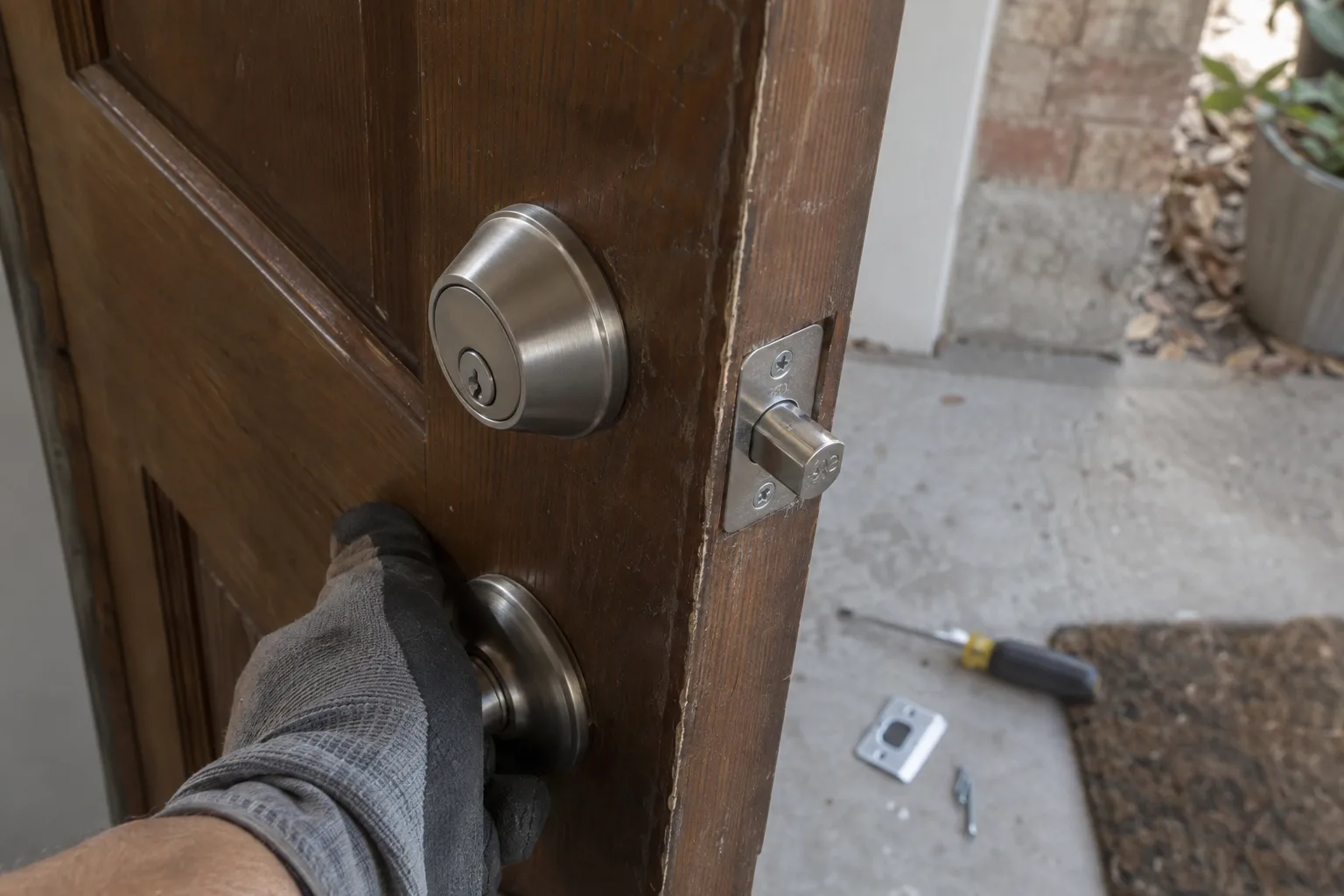
We bore the door when it needs it, fit a 1-inch throw bolt, and set the strike with long screws that reach the framing.
- Standard 2-1/8 inch bore with a 2-3/8 or 2-3/4 inch backset, matched or cut on site.
- Reinforced strike plate fastened with 3-inch screws into the stud.
- Keyed alike with your existing locks when the keyway matches.
Call or text the same number. Call to confirm availability in your area.
Dispatch slip
Have these three ready
- 01Where you are
- 02Which doors, and if they have a deadbolt now
- 03The brand on your current locks or keys
What deadbolt installation in Dallas homes actually involves.
Deadbolt installation Dallas homeowners call us for usually falls into one of three jobs. Each one starts the same way: measuring the door, checking the frame, and finding out which key you want the new lock on.
A new deadbolt on a door with none
Common on garage entry doors, side doors and back doors that only have a knob lock. We drill a 2-1/8 inch hole through the face of the door and a 1-inch hole into the edge, set at a 2-3/8 or 2-3/4 inch backset, then cut the shallow pockets for the bolt faceplate and the strike. We check the door first, since some fiberglass and steel doors only have solid blocking where the factory expected hardware.
Upgrading a weak deadbolt
If the bolt is short, the cylinder spins in the door, or the key fights you, the new deadbolt goes into the existing holes. Most residential deadbolts use the same standard prep, so no extra drilling is needed in most cases. Not sure whether to rekey or replace? Our rekey vs replace guide walks through it.
Matching your existing key
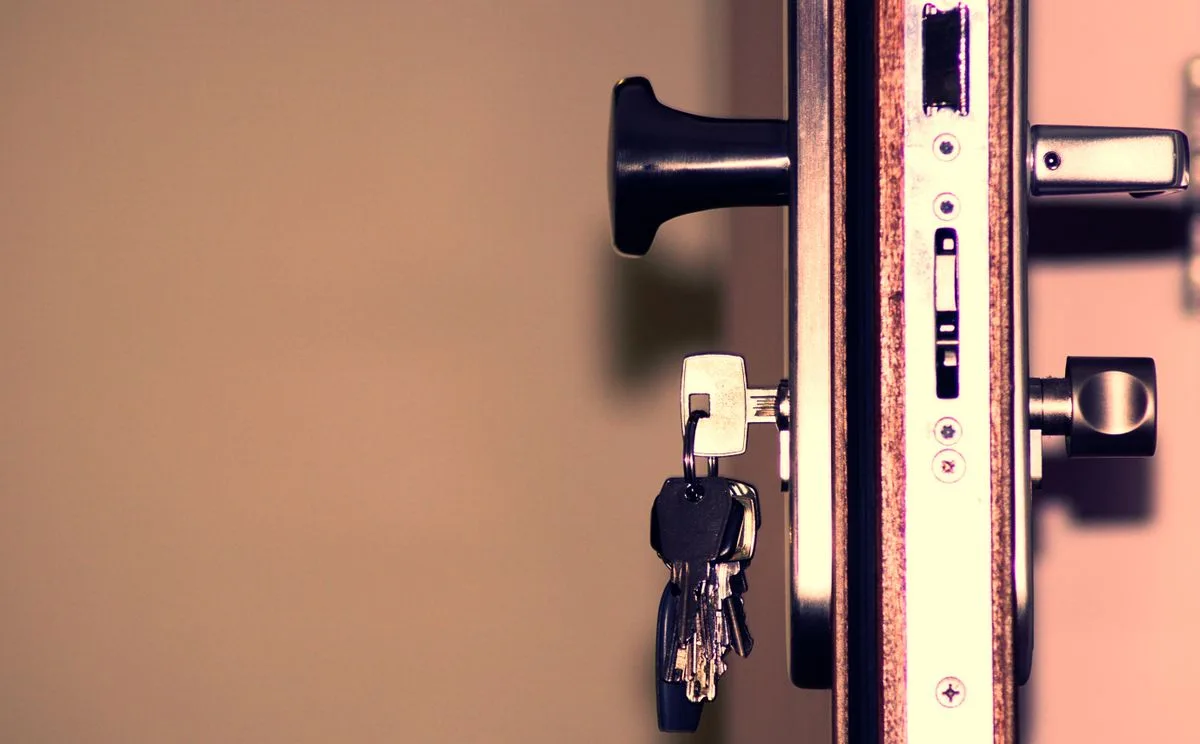
We pin the new cylinder to the key you already use for the front door and knob locks, so one key still opens everything. That works when the keyways match, for example Kwikset to Kwikset or Schlage to Schlage.
Call 469-300-5525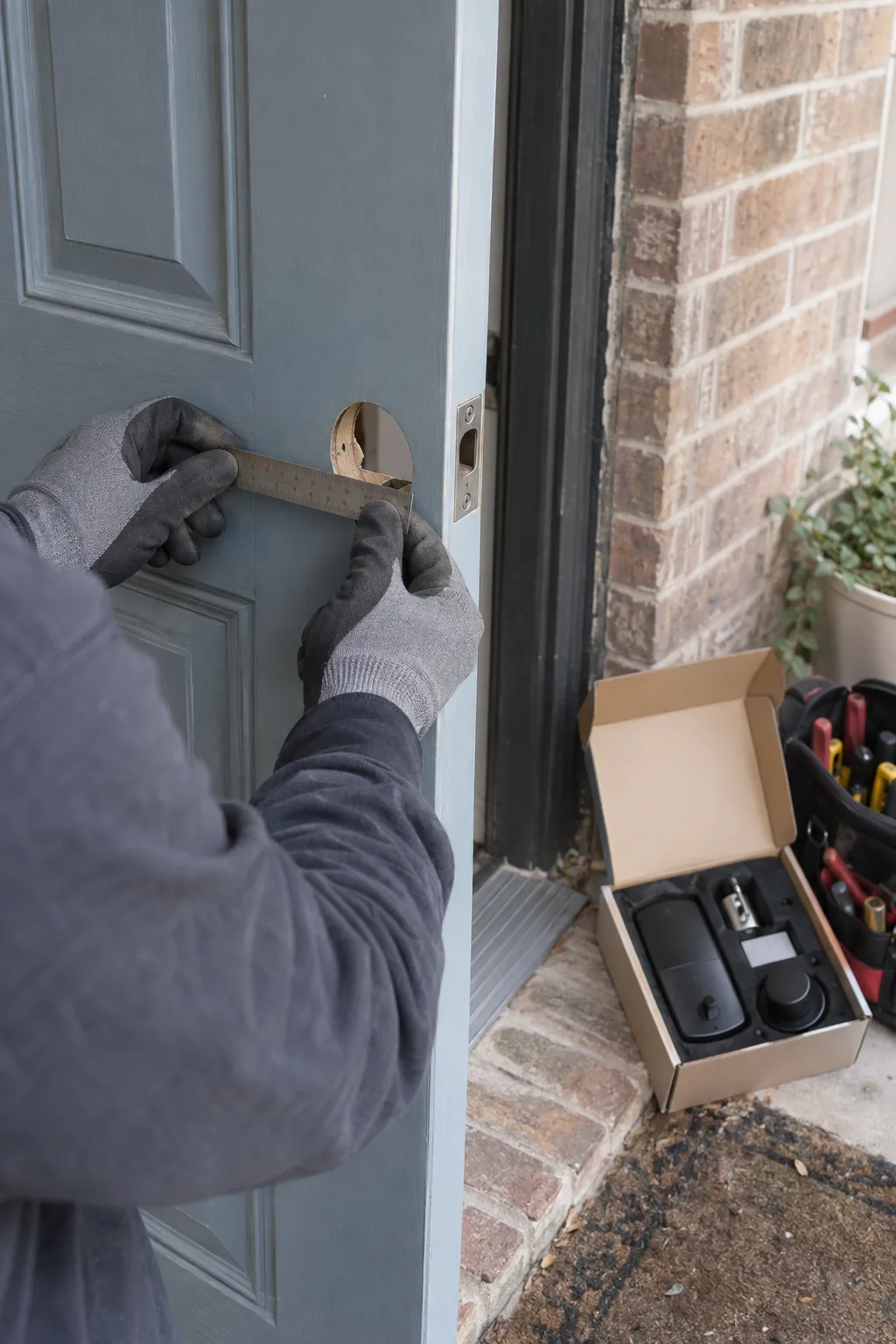
Most kick-in break-ins defeat the frame, not the lock.
A deadbolt is only as strong as the wood it locks into.
Door edge and frame, top-down
Jamb-only screws vs screws into the stud
The bolt sits in the strike. Short screws hold the strike to the jamb only. 3-inch screws carry the load back into the wall framing.
When a door is kicked, the bolt itself rarely snaps. What gives is the strip of jamb wood around the strike, held on by a few short screws. That is why the strike and its screws get as much attention on our installs as the lock does.
The 1-inch throw
The throw is how far the bolt extends past the door edge. Standard residential deadbolts throw 1 inch, which puts the bolt deep into the frame instead of just past the stop. We check that it reaches full throw with the door closed. If the door has sagged and the bolt drags or stops short, we adjust the strike so it seats all the way.
The strike plate and the stud
A reinforced strike is a heavier plate, often with a deeper box around the bolt hole. We fasten it with 3-inch screws that pass through the jamb and the gap behind it into the wall stud. The short strike screws that come in many boxes, often around 3/4 inch, stop in the jamb. On a wood-framed opening, the longer screws are the cheapest real upgrade on the whole job.
Bore and backset, verified
The standard prep is a 2-1/8 inch face bore and a 1-inch edge bore. Backset, the distance from the door edge to the center of the face bore, is 2-3/8 or 2-3/4 inch on most homes, and most deadbolt latches adjust between the two. Most residential deadbolts fit the common 1-3/8 and 1-3/4 inch door thicknesses. We measure all of it before choosing hardware.
Quick check at home: back out one screw from your deadbolt strike plate. If it is short enough to sit in your palm, it only reaches the jamb.
Call 469-300-5525ANSI/BHMA grades 1, 2 and 3: what the label on the box means.
The grade is a tested rating, not a marketing tier.
ANSI/BHMA deadbolt grade
- Grade 1Heaviest duty
- Grade 2Residential
- Grade 3Light duty
BHMA, the Builders Hardware Manufacturers Association, writes the lock standards and ANSI accredits them. Deadbolts are tested for how many lock and unlock cycles they survive and how much force the bolt and cylinder take before they give. Grade 1 passes the toughest version of those tests, Grade 3 the lightest.
For an exterior door, we recommend Grade 1 or Grade 2. Grade 3 deadbolts are common in bargain and builder packs. The grade is printed on the packaging or the spec sheet, and we tell you the grade of anything we install. Hardware grade is also one of the main drivers of price, which our Dallas locksmith cost guide breaks down.
- Signs your deadbolt is the weak link.The bolt stops short, the cylinder turns in the door, or the key only works if you push or lift the door.
- Grade alone is not enough.A Grade 1 deadbolt set into a strike with short screws still fails at the jamb. The two upgrades go together.
Single cylinder, double cylinder, or smart deadbolt: picking the right one for the door.
The right deadbolt depends on the door: what is next to it, who uses it, and whether it is a way out in an emergency.
Single cylinder
A key outside and a thumb turn inside. This is what most DFW homes need on most doors. Anyone inside can unlock it fast without hunting for a key.
Double cylinder
A key on both sides. People ask for it when a door has glass in it or next to it, so someone cannot break the glass and reach the thumb turn. The trade-off is fire safety. The International Residential Code, which many DFW cities base their residential rules on, says exit doors must open from inside without a key or special knowledge. City amendments, HOA rules and rental rules vary. For rentals, the Texas Property Code defines a keyed deadbolt as one that opens from inside with a knob or lever, without a key. We talk it through with you, and on a door you would use to get out in an emergency we usually recommend a single cylinder.
Keyed alike
New deadbolts can be pinned to the key you already use. If your current locks are a different brand or keyway, we tell you before we install, and you choose between matching hardware or rekeying everything to one new key.
Smart deadbolt
Choose one when you want door codes for a dog walker, cleaner or guests, or want to lock up from your phone. It uses the same bore, backset and strike as a standard deadbolt, so the strike screws still matter. See smart lock installation.
When you call
- Which doors, and whether any have glass in or near them
- The brand of your current locks, so we can match the key
- Whether you rent, own, or have HOA rules on hardware
Six checks on every deadbolt we install, before the job is closed.
Fast Local Locksmith LLC469-300-5525
Checklist
A deadbolt that holds, not just one that turns.
- Bore and backset matched.2-1/8 inch face bore, 1-inch edge bore, and the latch set to your 2-3/8 or 2-3/4 inch backset.
- Full 1-inch throw.Tested with the door closed, so the bolt seats all the way into the strike.
- Strike screws into the stud.3-inch screws through the jamb into the framing on wood-framed openings.
- Grade stated up front.You know whether you are getting Grade 1, 2 or 3 before we install.
- Key matched where possible.Pinned to your existing key when the keyway allows it.
- Smooth operation.Key and thumb turn work without pushing, pulling or lifting the door.
How a deadbolt installation goes, start to finish.
Three steps, in the same order on every door.
Dispatch slip
Filled in
Garage entry, no deadbolt yet
TakenMatch the front door key
RoutedSingle cylinder, thumb turn inside
Open- Step 1
Measure and check the door
The technician checks door thickness, any existing bore and backset, and the frame. On a door with no deadbolt, we confirm there is solid material where the bolt will go. On an upgrade, we look at why the old one failed, since a sagging door or loose jamb will wear out a new lock too.
- Step 2
Bore or fit, and key the cylinder
For a new install, a boring jig guides the 2-1/8 inch face bore and the 1-inch edge bore, then the faceplate and strike pockets are chiseled clean. For an upgrade, the new deadbolt goes into the existing prep. The cylinder is pinned to your existing key when the keyway matches.
- Step 3
Set the strike and test
The reinforced strike goes in with 3-inch screws into the stud. We close the door and run the bolt to full throw, test every key, and adjust the strike if the bolt drags. You try it yourself before we leave.
Where we install deadbolts across DFW.
Dallas neighborhoods and the cities around them, on both sides of the Metroplex.
In Dallas we cover Lakewood, Lake Highlands, Preston Hollow, Oak Cliff, east Dallas and north Dallas. Across the Metroplex we serve Plano, Frisco, McKinney, Allen, Richardson, Garland, Mesquite, Rowlett, Irving, Coppell, Carrollton, Farmers Branch, Lewisville, Denton, Grapevine, Southlake, Euless, Bedford, Arlington, Grand Prairie, Fort Worth, DeSoto, Duncanville and Cedar Hill. See the full service areas list, and call to confirm availability in your zip code.
Not on the list? Call and we will tell you straight away.
Call 469-300-5525Related home lock services.
Adding a deadbolt is often part of a bigger lock job. These are the services people pair with it. Just moved in? Start with our new home security checklist.
- Lock replacementNew knobs, levers and full lock sets when the old hardware is worn out.See service
- Lock rekeyNew pins in your existing locks so old keys stop working.See service
- Smart lock installationKeypad and app-controlled deadbolts, fitted to the same strong strike.See service
- Rekey after movingNew keys for a new home, so past owners and builders are locked out.See service
Deadbolt questions we get on the phone.
How much does deadbolt installation in Dallas cost?
It depends on whether the door needs to be bored, the grade of deadbolt, whether it is keyed to your existing key, and the time of day. Swapping an existing deadbolt falls under lock replacement, which our cost guide puts at $75 to $200 per lock and up depending on hardware grade. Adding a deadbolt to a door with no prep takes more work, so we quote it after hearing about the door.
Can you add a deadbolt to a door that does not have one?
Yes, in most cases. We drill a 2-1/8 inch face bore and a 1-inch edge bore at a standard backset, then cut the pockets for the faceplate and the strike. We check the door first, because some fiberglass and steel doors only have solid blocking where the factory planned for hardware.
Should I get a single or double cylinder deadbolt?
Most homes are best served by single cylinder deadbolts, with a thumb turn inside. A double cylinder needs a key on both sides, which can slow you down getting out in a fire. The residential code many DFW cities follow requires exit doors to open from inside without a key, and city, HOA and rental rules vary, so we talk through each door before installing one.
Can my new deadbolt use the same key as my other locks?
Usually, yes. We pin the new cylinder to your existing key when the keyways match, for example Kwikset to Kwikset or Schlage to Schlage. If they do not match, we tell you before installing, and you can choose matching hardware or rekey everything to one new key.
What is the difference between a Grade 1, 2 and 3 deadbolt?
ANSI/BHMA grades rate how many cycles a deadbolt survives and how much force it takes in testing. Grade 1 is the heaviest duty, Grade 3 the lightest. We recommend Grade 1 or Grade 2 on exterior doors, set into a reinforced strike with 3-inch screws into the stud.
Is a smart deadbolt as secure as a regular one?
The bolt and strike work the same way, so check the BHMA grade like you would on any deadbolt, and use the same long strike screws. A smart deadbolt makes sense when you want codes for guests or service people, or remote locking. Batteries need changing, and most models keep a key or backup way in.
Ready for a deadbolt that holds?
Tell us which doors need one and which key you want it on.
We will confirm the door prep, the cylinder type and the hardware grade with you before the technician heads out, and we bring the deadbolt and strike hardware with us.
469-300-5525You can also reach us by email or through the contact form on this site.
info@fastlocallocksmith.net