
Every licensed Texas locksmith is verifiable online
Here is where to look before you call: the DPS Private Security Bureau database, what to ask on the phone, and why it matters across a metro this spread out.
469-300-5525Call or text the same number.
Texas law requires locksmith licensing, and you can check it in two minutes
Every licensed Texas locksmith is searchable in a free public database before you ever open your door.
Texas Occupations Code Chapter 1702 (the state law governing private security services, including locksmith work) requires both locksmith companies and individual technicians to hold active licenses. Those licenses are issued and tracked by the DPS Private Security Bureau, the Texas Department of Public Safety division responsible for enforcement.
Any consumer can search that database at no cost. You don't need an account. You don't need to make a single phone call. You just need the company name or the technician's name, and the answer is right there.
Most Dallas residents have never been told this is an option. This page exists to change that.
2minutes
That's about how long a DPS license verification search takes, with no account and no phone call.
DFW's scale creates a specific hiring challenge
The sheer size of the Dallas-Fort Worth market makes locksmith verification more important here than almost anywhere else.
DFW covers roughly 9,000 square miles. When someone in Mesquite or Farmers Branch searches for a locksmith at 11 PM, the result that appears first may look like a local Dallas business. The phone number may have a 214 or 972 area code. But the person who answers might be sitting in a call center with no geographic connection to Texas at all.
Here is what most homeowners don't realize about how some locksmith listings work: a central dispatch operation can route your call to whoever is physically closest, sometimes an independent contractor with no direct relationship to the company name on the listing. That contractor may or may not hold a valid Texas locksmith license.
In a metro this large, that routing gap is real. Customers in Irving, Richardson, Carrollton, and outer suburbs like Forney or Balch Springs are statistically more likely to be served by a contractor dispatch model than someone in central Dallas. The DPS database closes that gap. It gives you confirmation before anyone knocks on your door.
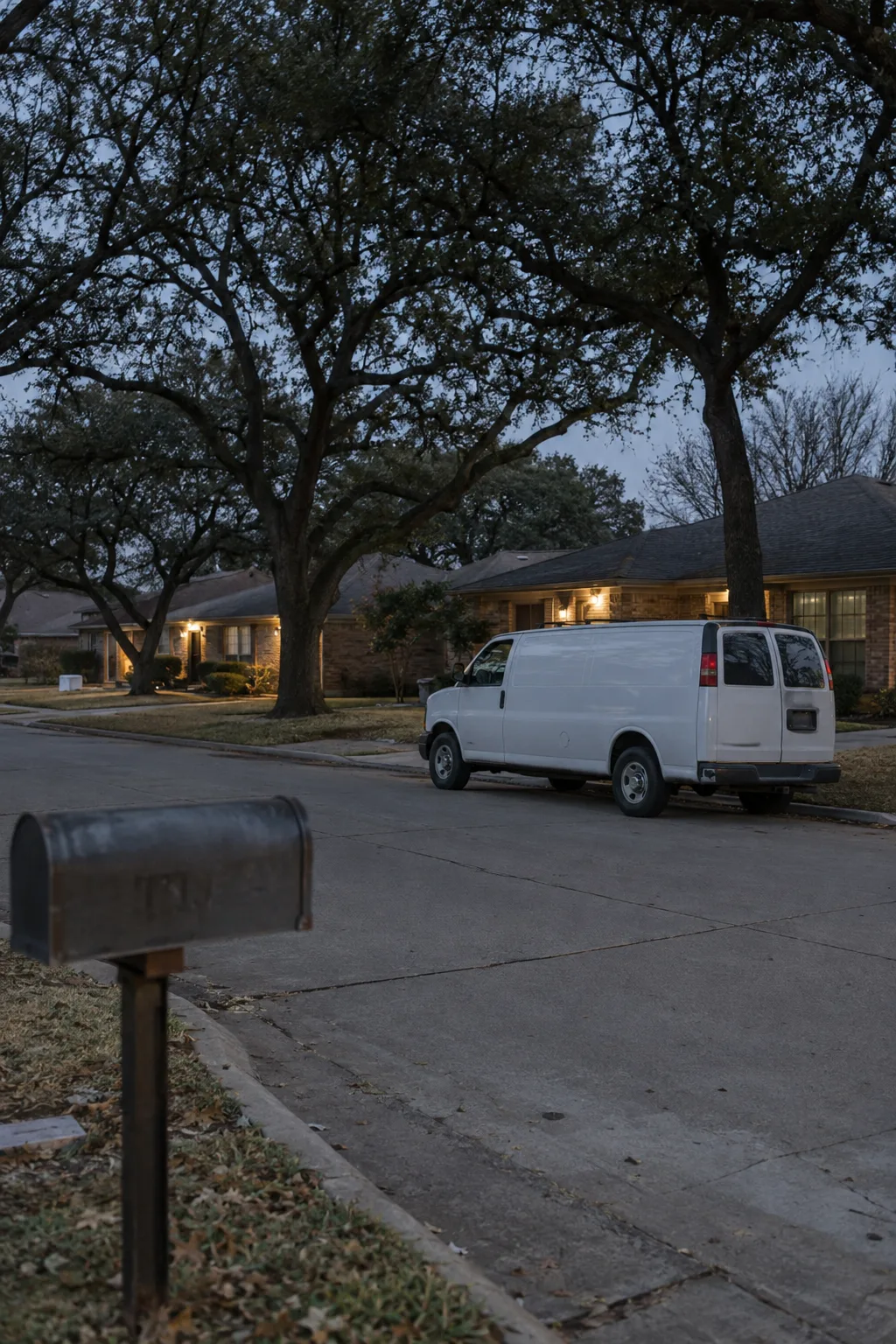
The full picture: how Texas locksmith licensing actually works
Texas has a two layer licensing requirement that covers both the company and the individual doing the work.
This matters because a licensed company can, in theory, dispatch an unlicensed technician. Knowing the difference helps you ask the right questions.
The locksmith company license
Any business operating as a locksmith company in Texas must hold a company level license issued by the DPS Private Security Bureau. This includes businesses that provide residential, commercial, or automotive locksmith services.
The company license is tied to the business entity. It must be maintained with active status. If a company's license has lapsed, expired, or been suspended, the business is not legally authorized to operate.
The locksmith technician license
This is the individual level credential. Each person physically performing locksmith work in Texas, the one who actually shows up and works your lock, is required to hold a separate Locksmith Technician License.
Technicians must carry proof of licensure on site during every job. That's not a suggestion. It's a requirement under Texas law. You have the right to ask to see it before any work begins. A technician with nothing to hide will hand it over without hesitation.
How to run a license verification search
The DPS Private Security Bureau provides an online license verification tool on its website. The search is free and takes about two minutes.
If the company name doesn't appear in the database at all, that's meaningful information. Ask the company directly for their license number, then search it. A legitimate operation will provide that number immediately.
- Step 1
Search by name or number
Business name, individual name, or license number all work as search terms.
- Step 2
Read the status
Results show whether the license is active, expired, suspended, or has conditions attached.
- Step 3
Act on what you find
An expired or suspended status means they are not authorized, regardless of what they say on the phone.
Common scenarios Dallas residents run into
Knowing how licensing questions surface in real situations helps you respond confidently instead of feeling caught off guard.
Late night car lockout in Garland
It's 1 AM. Keys are locked in the car in a parking lot off Beltline Road. The first search result looks local. The price quoted over the phone sounds reasonable. A technician arrives 30 minutes later, no ID badge visible, no documentation offered. The price is higher than quoted.
This is the bait and switch pattern documented in Texas Attorney General consumer alerts. The way to protect yourself starts before the call. A quick DPS database check on the company name takes two minutes. If the license shows active, you have a baseline of accountability. If it doesn't appear, you have a reason to call someone else.
Check before the callNew homeowner in Frisco rekeying after closing
Frisco is one of the fastest growing cities in the country. First time homebuyers there often call a locksmith the same week they get their keys. They're excited, slightly overwhelmed, and not thinking about license verification.
For this situation, you have more time. Run the search while you're scheduling the appointment. Ask the company for their license number upfront. A reputable locksmith answers that question easily. It's a normal request under Texas law, not an unusual demand.
Check while schedulingProperty manager in Irving handling tenant turnover
Property managers in Irving dealing with multi unit rekeying have regular, recurring locksmith needs. At scale, they can't afford to vet a new vendor every time.
The solution is to verify once thoroughly (license check, technician credentials, company history) and build that vendor into a regular rotation. The DPS database makes that initial check straightforward.
Verify once, then rotate
Professional perspective: what we see from the field
The licensing requirement exists for a reason, and customers benefit most when they actually use it.
The locksmith industry in DFW has a trust problem that has been building for years. It's rooted in the contractor dispatch model, which prioritizes geographic availability over vetting. A customer calls what looks like a local Dallas locksmith, gets connected to a call center, and ends up with someone at the door whose qualifications they can't confirm.
The DPS Private Security Bureau database is the most underused consumer tool in this industry. Most people don't know it exists. Most locksmiths, licensed or not, don't volunteer that information.
Texas Occupations Code Chapter 1702 was written specifically to create accountability in this trade. The individual Locksmith Technician License requirement means someone's name is attached to every job. That's the layer of accountability that protects you.
Ask for the license number before work starts. Run the search yourself if you have a minute. It takes longer to read this paragraph than to check the database. The more Dallas area customers who do this routinely, the harder it becomes for unlicensed operators to stay in business here.
Fast Local Locksmith LLC
Dispatch slip
Worth asking
- What is your license number?
- Can I see your ID before you start?
When to call a pro: making the right hiring decision
Verification is the starting point. It's not the whole picture. After confirming active license status, here is what to ask.
For non emergency situations (new homeowner rekeying, smart lock installation, commercial lock upgrades) you have time to gather two or three quotes and compare. For emergencies, speed matters more, but a two minute license check still fits before the technician arrives.
A company with specific neighborhood familiarity (one that knows the difference between serving Southlake and serving South Dallas) is more likely to dispatch efficiently. Ask where they're dispatching from, and whether the technician they're sending is familiar with your area.
Fast Local Locksmith LLC469-300-5525
Ask on the call
- 01Does the quoted price include all fees: labor, parts, and service call?
- 02Will the same technician you spoke with be the one who shows up?
- 03Can they confirm an approximate arrival window before you commit?
Areas we serve
Fast Local Locksmith LLC serves the full Dallas-Fort Worth Metroplex.
Our coverage includes Dallas, Fort Worth, Arlington, Plano, Frisco, McKinney, Irving, Garland, Mesquite, Grand Prairie, Carrollton, Richardson, Farmers Branch, DeSoto, Duncanville, Balch Springs, Cedar Hill, Lancaster, Lewisville, Denton, Rowlett, Rockwall, Mansfield, Euless, Bedford, Hurst, Grapevine, Flower Mound, Coppell, and many surrounding communities, including outer markets like Waxahachie, Forney, Weatherford, Sherman, and Stephenville.
Use this information before your next call
Knowing about Texas locksmith licensing is useful. Using it before you hire is what actually protects you.
The DPS Private Security Bureau license verification tool is free. The search takes two minutes. The license number to ask for is a normal, legal request, not an unusual one.
If you're looking for a locksmith in the Dallas-Fort Worth area and want to get your questions answered before committing, we're here. We're glad to answer your questions before any work begins.