
Broken key extraction in Dallas, without wrecking the lock.
Key snapped in a front door, deadbolt, padlock, car door or ignition? Stop turning it. We pull the fragment out and cut you a working key.
A mobile locksmith comes to the lock anywhere in Dallas-Fort Worth. In most cases the cylinder is saved.
- Non-destructive extraction is tried before any drilling or replacement.
- House locks, deadbolts, padlocks, car doors and ignitions.
- A new key cut from the broken pieces or from the key code.
Call or text the same number. Open 24 hours, call to confirm availability.
Dispatch slip
Have these three ready
- 01Where you are
- 02Where the key broke (door, deadbolt, padlock, car)
- 03How much of the key is still sticking out
How a locksmith gets a snapped key out of the cylinder.
The fragment is wedged under the pins. The job is to catch it and slide it straight back out.
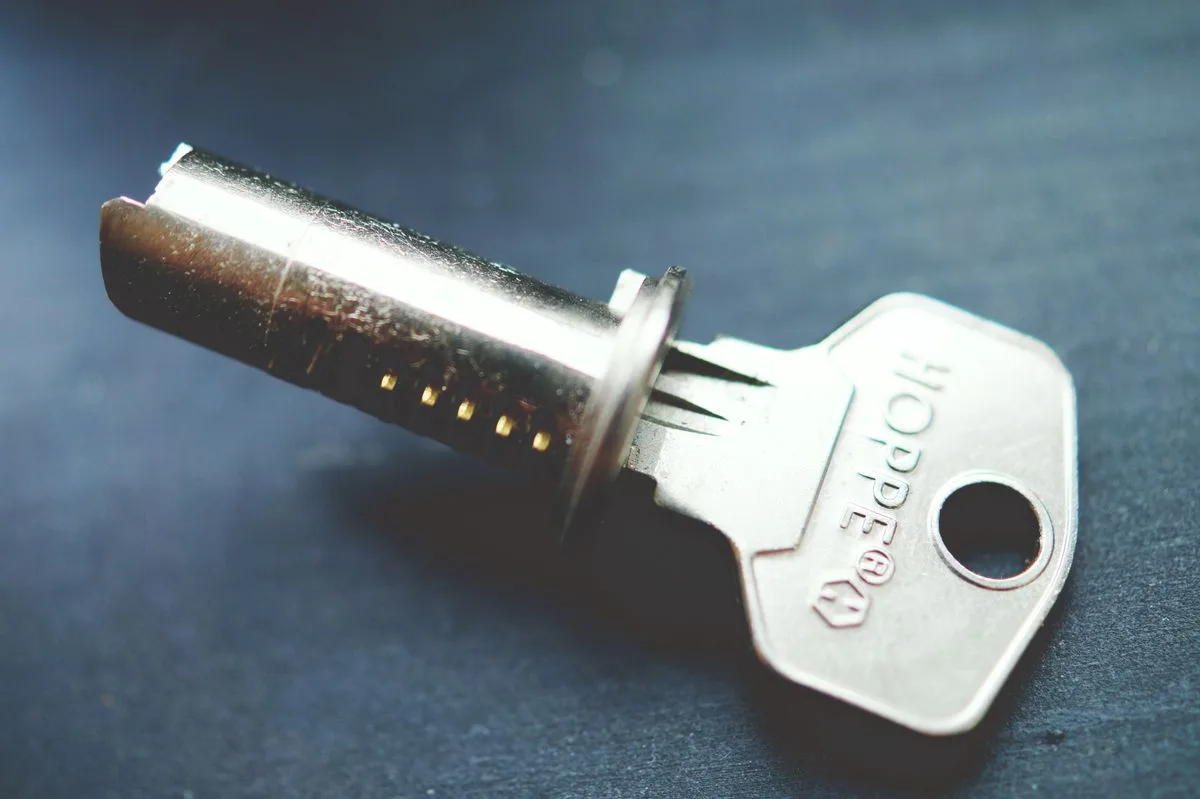
A key that breaks almost always leaves its cut section inside the plug, the part of the lock that turns. The pins are still resting on those cuts. Pull at the fragment from the wrong angle, or with the plug turned, and the pins hold it in place.
So the first step is to bring the plug back to the position where the key goes in and comes out. Then the locksmith slides a thin extractor blade into the keyway alongside the fragment. A hooked blade has small barbs that catch one of the key's cuts. A spiral blade has a twisted edge that bites into the metal as it is turned. Either way, the fragment comes out in short, controlled pulls.
When a fragment is jammed hard or the plug will not return to its home position, the cylinder is taken out of the door, and the plug is pushed out of its housing with a follower tool so the pins stay in place while the fragment is freed.
If nobody has dug at it with pins or glue, the lock usually keeps working.
Call 469-300-5525Inside the cylinder
- Fragment outPlug back home, blade in alongside, key drawn out. The cylinder keeps working.Usual
- Cylinder pulledJammed fragment or a plug stuck off position. The cylinder comes out and is opened on site.Sometimes
- Glue or pin damageGlue in the pins or bent pins from DIY attempts can mean a rekey or a new cylinder.Replace
Why keys snap in the first place.
A key rarely breaks on a good day. It breaks after months of small warnings.
Most house keys are cut from brass or nickel-silver, which are fairly soft. Every turn twists the blade a little, and over years that repeated twisting causes metal fatigue: tiny cracks that grow until a normal turn finishes the job. The crack usually starts at the thinnest point, near the shoulder or at a deep cut.
Worn keys and cheap copies make it worse. A blade that has thinned out, or a duplicate cut slightly off, needs more force to lift the pins. A dry or dusty cylinder adds friction, so you twist harder. A deadbolt that drags on its strike plate because the door has sagged puts the bolt's resistance straight into the key.
The last step is nearly always force: a hard twist in a stiff lock, a key wiggled sideways, or a key turned before it was fully seated. If your key has been getting harder to turn, that was the warning.
$65 to $150
Typical broken key extraction range for a car or home in our Dallas cost guide. After-hours calls add $25 to $75.
Five places a key snaps, and what each one takes.
The extraction idea is the same everywhere. The lock around it changes the details.
- 01
Front door knob or lever lock.
Usually a worn key or a cheap copy that finally gave out. The fragment tends to sit flush with the face of the lock, with nothing to grab.
We extract it at the door. If it will not come, the lock comes off the door and the plug is pushed out so the fragment can be freed without damaging the pins.
- 02
Deadbolt.
Deadbolt keys often snap because the bolt is binding on the strike plate. The door has dropped or swollen, the bolt cannot travel freely, and the key takes all the force.
After the fragment is out, we check whether the bolt throws cleanly with the door shut. If it drags, the strike needs adjusting, or the next key will go the same way.
- 03
Padlock.
Gates, sheds and storage units. Outdoor padlocks collect dust and rust, which makes them stiff and keys more likely to break.
We extract the fragment the same way. If the padlock is badly corroded, we will tell you if cutting it off and replacing it makes more sense than saving it.
- 04
Car door lock.
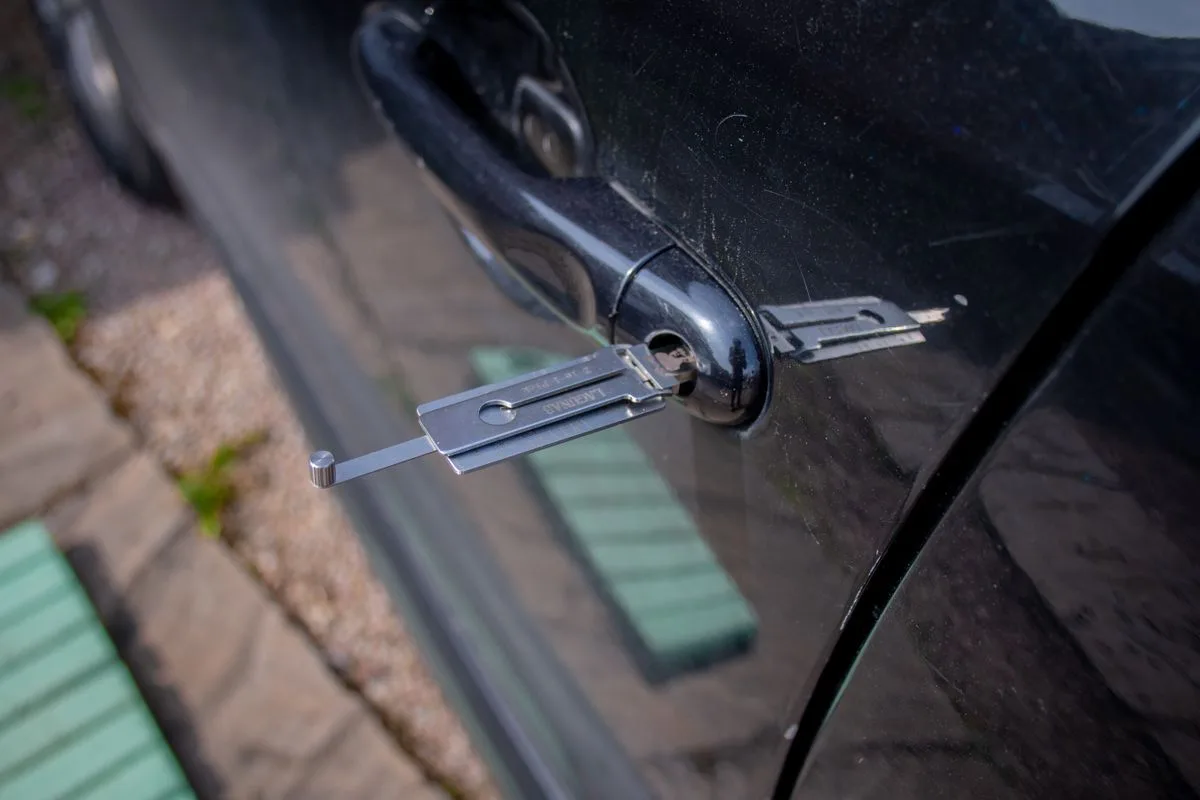
Most car door locks use flat spring-loaded wafers rather than pin stacks, but the extraction principle is the same: line the cylinder up, slide a blade in beside the fragment and draw it out.
If the cylinder has to come out, how much of the door has to come apart depends on the make and model. We tell you before we start.
- 05
Ignition.
Do not try to start the car with what is left of the key. The ignition plug has to be back at the position where the key goes in and comes out before the fragment will slide free.
Most ignition extractions happen at the vehicle. If the cylinder was damaged in the break, our car ignition repair page covers what comes next.
What not to do with a broken key in the lock.
Most cylinders we cannot save were damaged after the key broke, not by the break itself.
Stop turning the key. Then leave the lock alone.
Turning what is left of the key pushes the jagged edge deeper and can wedge it against the pins. Tweezers, pliers and knife tips usually push the fragment further in and scratch the inside of the plug. A bobby pin or paperclip can bend a pin or get stuck in the cylinder itself.
The superglue trick, gluing a stick to the fragment and pulling, almost never works. When glue runs into the pins it sets them solid, and the lock has to be replaced instead of cleared.
Before we arrive
- Keep turningDrives the fragment deeperNo
- Tweezers or pliersPush it in and scratch the plugNo
- Superglue on a stickCan set the pins solidNo
- Bobby pin or paperclipCan bend a pin or get stuck tooNo
- Keep both pieces and callThe broken half helps us cut the new keyDo this
Stop turning
Then call or text 469-300-5525 and tell us where it broke.
Our standards for broken key extraction.
Fast Local Locksmith LLC469-300-5525
Checklist
Every broken key job is handled the same way, whether it is a padlock or an ignition.
Locksmith companies and technicians in Texas are licensed by the DPS Private Security Bureau under Occupations Code Chapter 1702. How Texas licensing works.
- Extraction before drilling.Non-destructive extraction is tried first. Drilling or replacing the lock is the last option, not the first.
- Plug back home before tools go in.The plug is returned to the key-insertion position so the fragment can slide out under the pins.
- Cylinder checked after the fragment is out.We look for bent pins or wafers, debris and stiffness before cutting a key for it.
- New key tested in the lock.The new key is run in and out and turned through the full throw before we call the job done.
- Price talked through first.You hear what the job involves and what drives the price before work starts.
From the snapped key to a working one.
Three stages: tell us where it broke, get the fragment out, cut a new key and find the cause.
Dispatch slip
Filled in
Mesquite, front porch
TakenDeadbolt, snapped flush
RoutedFront door deadbolt
Open- Step 1
Tell us where it broke
Door lock, deadbolt, padlock, car door or ignition, and how much of the key is still showing. For a car, the year, make and model. That decides which extractors and key blanks the technician brings, and lets us talk through the price before anyone drives out.
- Step 2
Get the fragment out
We bring the plug back to the key-insertion position, slide a thin hooked or spiral extractor blade into the keyway alongside the fragment, catch a cut and draw it out in small pulls. If it is jammed, the cylinder comes out and the plug is pushed out with a follower so the pins stay put.
- Step 3
New key, and the reason it snapped
We cut a new key from the broken pieces, or from the key code when one is available, and test it in the lock. Then we check why the key broke: a worn cylinder, a dry lock or a bolt dragging on the strike. If the lock is worn out, we say so and you decide.
Areas we serve for broken key extraction.
Fast Local Locksmith reaches homes, businesses and drivers across the full DFW Metroplex.
We serve Dallas, Irving, Garland, Mesquite, Grand Prairie, Carrollton, Richardson, and Farmers Branch in the core metro. Coverage extends to Arlington, Plano, Frisco, McKinney, Allen, Lewisville, and Denton. We also reach Rockwall, Rowlett, Forney, Terrell, Kaufman, Waxahachie, Midlothian, Mansfield, Burleson, Fort Worth, Weatherford, Cleburne, and surrounding communities. See all service areas.
Not on the list? Call and we will tell you straight away.
Call 469-300-5525Related locksmith services.
When the lock or the key needs more than an extraction, these pages cover the next step.
- Car ignition repairWorn, stuck or damaged ignition cylinders, fixed at your vehicle.See service
- Car key replacementCut and, where needed, programmed at your vehicle.See service
- Residential lock replacementWhen a worn or glued cylinder is not worth saving.See service
- Emergency locksmithLocked out at night with half a key in the door.See service
If the new key is for a car with a transponder chip, it may also need programming to the vehicle.
Broken key questions we hear most.
A key broke off inside my lock. What should I do first?
Stop turning the lock. More rotation drives the fragment deeper and makes extraction harder. Do not try to remove it with tweezers, glue or a bobby pin, because these methods damage the cylinder. Keep the broken half of the key, then call a locksmith and say exactly where it broke: a door lock, deadbolt, padlock, car door or ignition, and whether any of the key is sticking out.
How much does broken key extraction in Dallas cost?
Our cost guide lists broken key extraction for a car or home at $65 to $150. Evening and weekend calls add an after-hours adjustment of $25 to $75. A new key, pulling the cylinder, or replacing a lock that was damaged before we arrived are priced separately. We talk through the price on the phone before anyone is dispatched.
Will my lock still work after the broken key is removed?
Usually, yes. Extraction is a non-destructive process, and the cylinder is normally saved if no one has damaged it with DIY attempts first. If glue has set in the pins, or pins or wafers were bent by tools, the lock may need to be rekeyed or replaced. We test the cylinder after the fragment is out and tell you which applies.
Can you make a new key from the broken pieces?
In most cases, yes. With both halves, the cuts can usually be read and copied onto a new blank. If the pieces are badly worn or missing, the key can often be cut from the key code when one is available for the lock or vehicle. If your car key has a transponder chip, the new key may also need programming before the engine will start.
My key snapped in the car ignition. Do I need a new ignition?
Not usually. Most broken keys can be extracted from the ignition at the vehicle. The ignition has to be back at the position where the key goes in and comes out, so do not try to start the car with the stub. A new ignition cylinder is only needed if the cylinder itself was damaged in the break or by attempts to remove the fragment.
Why did my key break in the lock?
Keys are made of fairly soft metals like brass, and years of twisting cause metal fatigue until a normal turn snaps the blade. A worn key or poor copy, a dry or dirty cylinder, or a deadbolt dragging on its strike plate all add force. The final break usually comes from forcing a stiff lock. After extraction we check which of these caused it.
Half a key stuck in the lock?
Stop turning it, keep the other half, and call. That is the whole first step.
Tell us where the key broke and where you are, and we will dispatch a mobile locksmith to your door, gate or vehicle anywhere across Dallas and the greater DFW area.
469-300-5525You can also reach us by email or through the contact form on this site.
info@fastlocallocksmith.netRequest a callback
Tell us where you are and where the key broke. We will call you back to confirm the job and the price.
Contact us