
Safe opening in Dallas. Non-destructive entry before any drilling.
Forgotten combination, dead battery or a jammed bolt. We assess before we act.
Home safes, gun safes and commercial drop safes across Dallas and DFW. The technician comes to the safe.
- Every call starts with a question: what's the lock type, and what's the least invasive way in?
- Safe manipulation and battery override are tried before anything else.
- If drilling is likely, you hear that before work starts, not after.
Call or text the same number.
Dispatch slip
Have these three ready
- 01Where you are
- 02What type of safe it is
- 03What happened last time it was opened
A safe lockout has one good solution: a methodical assessment first.
This is not a service with one method. It's a service that starts with a diagnosis.
Fast Local Locksmith handles home safes, gun safes and commercial drop safes across the Dallas-Fort Worth area. Every call starts with the same question: what type of lock is on this safe, and what's the least invasive path to open it? Whether the issue is a forgotten combination, a dead battery, or jammed bolt work (the internal locking bars that hold the safe door shut), the approach changes based on what's in front of the technician.
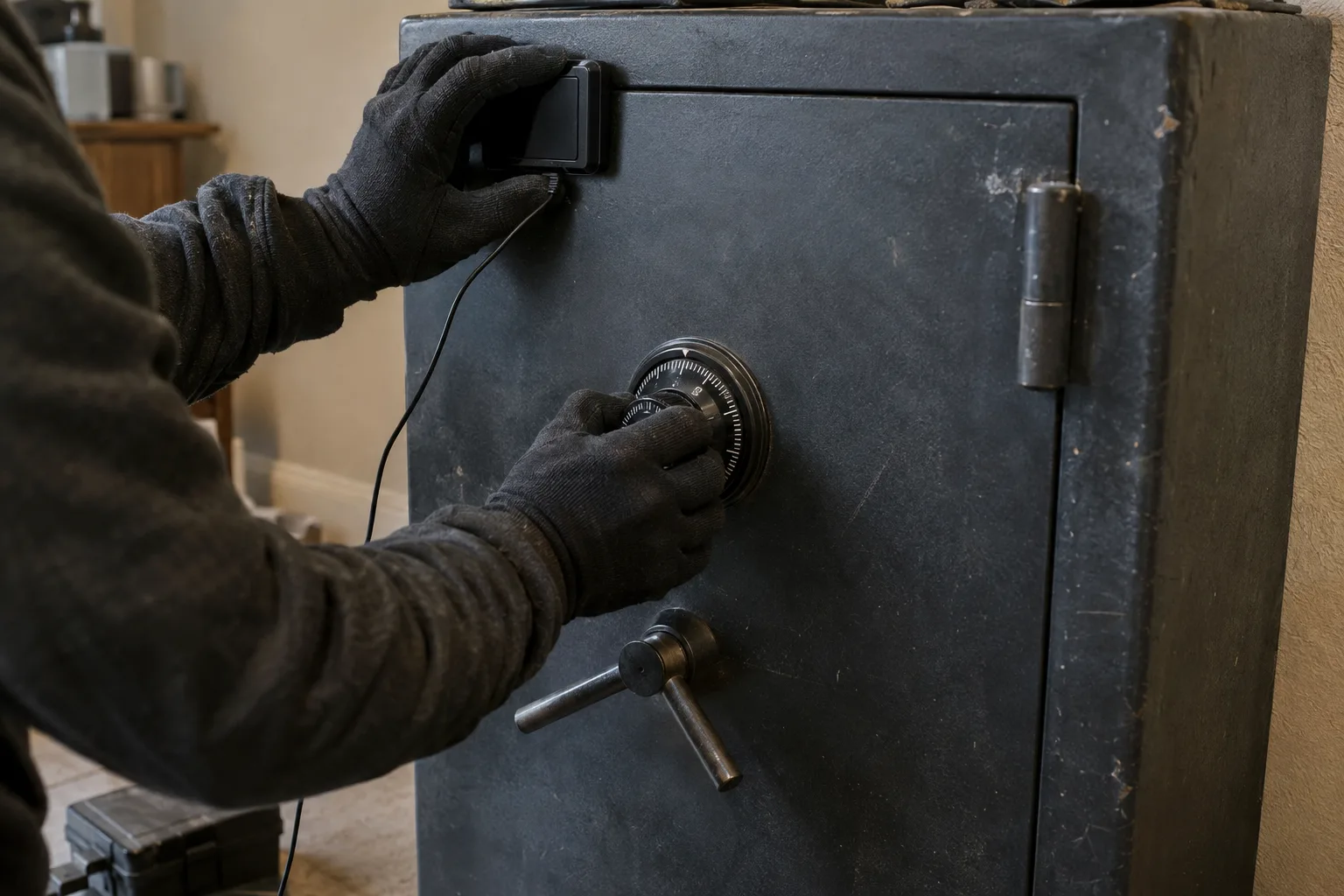
A mechanical dial calls for manipulation technique first: working the dial by feel until the mechanism gives up its combination without force. An electronic keypad calls for a battery override before anything else, since a drained battery is a far more common culprit than a failed circuit board. Only once those options are exhausted, and the bolt work still won't retract, does drilling enter the conversation, and it's raised as a question, not a surprise.
Call 469-300-5525What we see on safe opening calls.
Every safe type has its most common failure point, and its own access strategy.
For dial safes, safe manipulation (a non-destructive technique using tactile feedback from the mechanism) is always attempted first. Neither that nor a battery override damages the safe.
Home safes
Home safes in Dallas typically use a mechanical dial or an electronic keypad. The most common call is a forgotten combination on a safe that hasn't been opened in months. Second most common is a dead battery on an electronic safe lock the owner didn't know needed replacing.
Many electronic models allow an external battery override through a contact point on the keypad face. Both approaches preserve full function after the job.
Gun safes
Texas has high firearm ownership. That's the reason gun safe lockouts make up a meaningful share of safe opening calls in DFW. A forgotten combination, a failed electronic lock or a lost key has no DIY path that doesn't risk damage to the safe or its contents.
Gun safes vary in construction. Lighter residential cabinets use different locking mechanisms than heavy gauge gun vaults, so the approach changes accordingly. The goal every time is non-destructive entry first, preserving the safe's relocking capability.
Commercial drop safes and floor safes
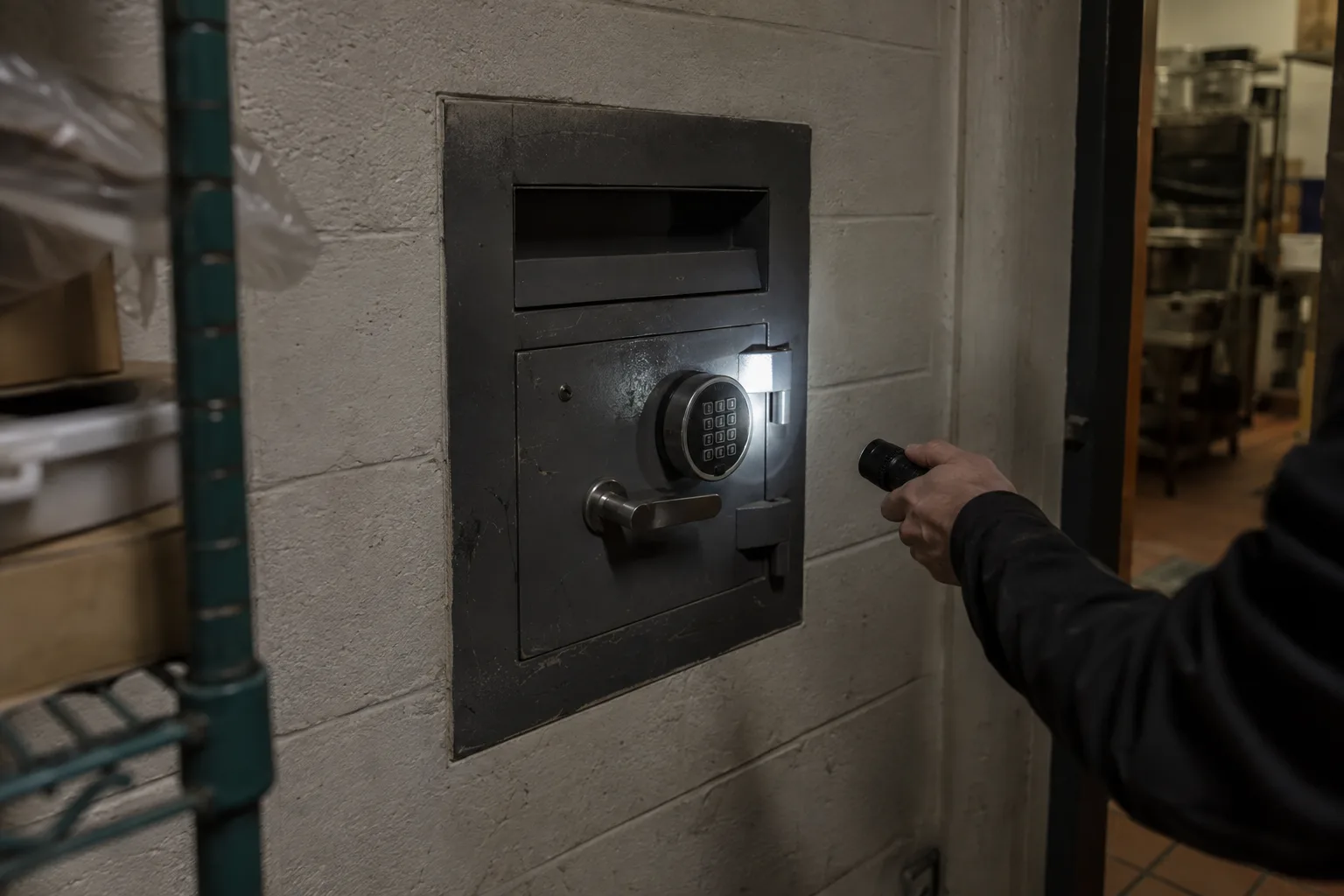
Drop safes are built for one way deposits. Restaurants, retailers and service businesses use them to secure daily cash without regular combination access. The problem arrives when a manager change happens and the combination leaves with that person.
Floor safes are often set into concrete and cannot be moved. The technician works on site with whatever access the installation allows. Bolt work is accessed through the mechanism or, when necessary, through controlled drilling, not guessing.
You can get back into your safe without destroying it.
We'll say before the job starts whether drilling is likely, not after.
Most safe lockouts resolve through safe manipulation or a battery override, both non-destructive. But some cannot be resolved that way. A safe with a damaged internal mechanism, a seized bolt work, or a dial lock that's been forced may need safe drilling: a precise hole into the safe body to reach and retract the bolt work directly.
Drilling doesn't mean the safe is ruined. In most cases a drilled safe can be re-serviced and fitted with a new lock, and goes back into daily use the same visit. What drilling affects is the resale value of the safe and the timeline of the job, not whether the safe will work again.
Both of those, the resale impact and the extra time, are conversations that happen before work begins, with a clear answer on whether non-destructive entry is likely to work for your specific safe. Not explanations offered after the hole is already there.
This is the honest version of the process. It's the version that's useful.
Our standards for safe opening service.
Fast Local Locksmith LLC469-300-5525
Checklist
These standards apply to every safe opening call, no exceptions.
- Assess the lock type first.Mechanical dial, electronic keypad, biometric or key operated, each gets a distinct approach.
- Attempt non-destructive entry before drilling.Safe manipulation and battery override are always considered first.
- Confirm contents are protected.No drilling begins without discussing the impact on the safe's interior.
- Document the approach.What was tried, what worked and the safe's condition afterward.
- Restore relocking capability when possible.A safe that functions after service beats one that doesn't.
- No unnecessary damage.The goal is access, not replacement.
How a safe opening call works.
From your first call to the moment the safe is open, the process is deliberate.
Dispatch slip
Filled in
Oak Cliff, home office closet
TakenElectronic keypad safe, dead battery
RoutedWorked fine in spring, fails in summer heat
Open- Step 1
Diagnostics
The technician asks three questions before arriving: what type of safe is it, what's the lock mechanism, and what happened the last time access was attempted. Those answers shape the tools loaded on the truck. On site, the exterior is examined, the keypad or dial is tested, and the lock grade is identified. Minutes, not an hour.
- Step 2
Implementation
Non-destructive methods are attempted first. For electronic safe locks, a battery override test runs. For mechanical dials, manipulation technique is applied. If neither resolves the lockout and the bolt work stays engaged, drilling becomes the discussion: location, size and what it affects for that specific safe model.
- Step 3
Post-service
Once open, the technician walks through what caused the lockout, what was done to fix it, and the current condition of the safe and lock. If a new lock is needed, that's discussed on the spot. You leave knowing exactly what happened and what your options are.
Areas we serve for safe opening.
We cover Dallas and the full surrounding DFW area.
Dallas, Oak Cliff, Lake Highlands, East Dallas, Richardson, Garland, Mesquite, Irving, Carrollton, Grand Prairie, Arlington, Plano, Frisco, McKinney, Lewisville, Denton, Rowlett, Rockwall, and surrounding communities. Commercial and residential calls welcome.
Not on the list? Call and we will tell you straight away.
Call 469-300-5525Related services.
Safe lockout outside business hours, or a lockout that isn't about a safe at all? The same dispatcher handles both.
Safe opening questions we hear most.
How much does safe opening service cost in Dallas?
Safe opening costs vary based on lock type, access method required, and whether drilling becomes necessary. A battery override on an electronic safe lock is a faster, simpler job than mechanical manipulation of a dial combination. Drilling adds time and may require a follow-up lock replacement. Call 469-300-5525 for a specific quote based on your safe type.
Will you try non-destructive entry before drilling my safe?
Yes. Every safe opening call starts with a non-destructive assessment. The technician identifies the lock mechanism first: electronic keypad, mechanical dial, or key operated. Battery override and safe manipulation techniques are attempted before any drilling is considered. Drilling is discussed with you before it begins, never after the fact.
How long does a safe opening appointment take from start to finish?
Most safe lockouts resolve in 30 to 90 minutes on site. Electronic safes with dead batteries often take less time. Mechanical dial manipulation takes longer. If drilling is required, the timeline extends and is explained before work begins. Phone triage before arrival shortens on site time significantly.
What's the difference between opening a gun safe and a regular home safe?
Gun safes vary widely in steel gauge and locking mechanism. Heavier gauge gun vaults use different bolt work than standard residential safes. That difference changes both the tools used and the technique applied. The goal is identical in both cases: non-destructive entry first, full relocking capability restored when possible.
Do I need to bring my safe somewhere, or do you come to it?
The technician comes to your safe, no transport or towing required. Safe opening service is performed on site at your home, business or commercial location. Floor safes set into concrete are worked on in place. Bringing the safe anywhere is never part of the process.
What happens to my safe after it's been drilled? Is it usable again?
A drilled safe can typically be refitted with a new lock mechanism and returned to service. Drilling affects resale value but not structural integrity in most cases. The technician walks you through lock replacement options right after access is restored. You leave knowing the safe's exact condition and your next steps.
Ready to get your safe open?
One call connects you with a technician who assesses your safe before anything else happens.
Tell us the safe type and what's happening. We'll confirm availability and give you an honest answer on what the process looks like before anyone drives out. The technician will discuss your specific safe model and access history on the phone, which shapes what tools come with them.
469-300-5525You can also reach us by email or through the contact form on this site.
info@fastlocallocksmith.net